Legacy & Journey
From a Family Legacy to a Youth Movement
The Yuva Parivartan Story

The Kher family’s legacy of service runs deep. On India’s first Independence Day in 1947, B.G. Kher — the first Chief Minister of Bombay State — stood at Brabourne Stadium saluting the flag. His life embodied leadership, sacrifice, and dedication, values that continue to guide his family’s work today.
Born on August 24, 1888, in Ratnagiri, Balasaheb Gangadhar Kher studied at Mumbai University and soon joined the freedom struggle. He became the first Premier of Bombay Presidency and in 1928 founded the Kherwadi Social Welfare Association (KSWA). A chance visit to Bandra East — then a marshland where migrant families lived in dire conditions — moved him to act. With Gandhian colleagues, he created the “Chamdewala Committee” to support Rajasthan’s khatik families working with soft leather.
Their efforts began with a dispensary and a small school, later expanding into income-generation programs like sewing, soap making, and khadi match production. In 1954, the area came to be known as Kherwadi.
Even as he rose to national prominence, Kher’s heart remained in social reform. He worked alongside Gandhi, Nehru, and Subhash Chandra Bose, played a key role in drafting India’s Constitution with Dr. B.R. Ambedkar, and served as High Commissioner to the UK. Education was his passion — he was Chancellor of Tilak University, supported the creation of Pune University, and established the Directorate of Technical Education in Bombay. His contributions were recognized with the Padma Vibhushan in 1954.
After Independence, Kher devoted himself fully to social causes — from KSWA’s community programs to Adivasi welfare, children’s films, and as Chairman of Gandhi Smarak Nidhi. Until his passing in 1957, he remained a tireless servant of the people, remembered not only as a statesman but also as a compassionate reformer who turned vision into enduring institutions.
Some stories don’t start with grand plans. They start with a restless feeling you can’t shake off.

In the early 90s, Kishor Kher seemed to have it all — a secure corporate job, steady income, and a comfortable life. Yet, between board meetings and deadlines, he felt an emptiness that money couldn’t fill. His wife, Mrinalini, a sociologist, often spoke of India’s forgotten youth — school dropouts in villages, boys forced into labor in city slums, girls whose dreams ended before they began.
These weren’t abstract stories; they were lives she had touched.
Kishor found himself thinking less about profit targets and more about those faces. One day, he left corporate life behind — no backup plan, only a resolve to do something meaningful. Together, he and Mrinalini stepped into places where hope was scarce. They taught skills, encouraged small enterprises, and showed young people that their past didn’t have to define their future.
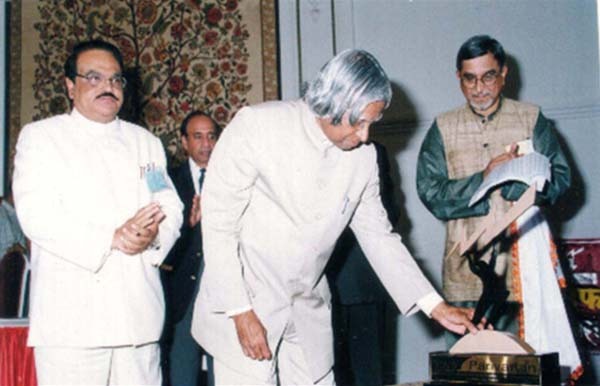
In the early 90s, Kishor felt a deep urge to do something meaningful. Encouraged by his wife Mrinalini, a sociologist, he left a thriving corporate career after IIM Ahmedabad to follow his heart—empowering youth.
Together, the Khers built an organisation dedicated solely to this mission, which grew into Yuva Parivartan (YP). In February 2003, the movement was formally launched by President Dr. A.P.J. Abdul Kalam.
Since then, YP has opened doors for thousands of young people across India, offering livelihood training, dignity, and a priceless second chance at life.